Dumbbell Row
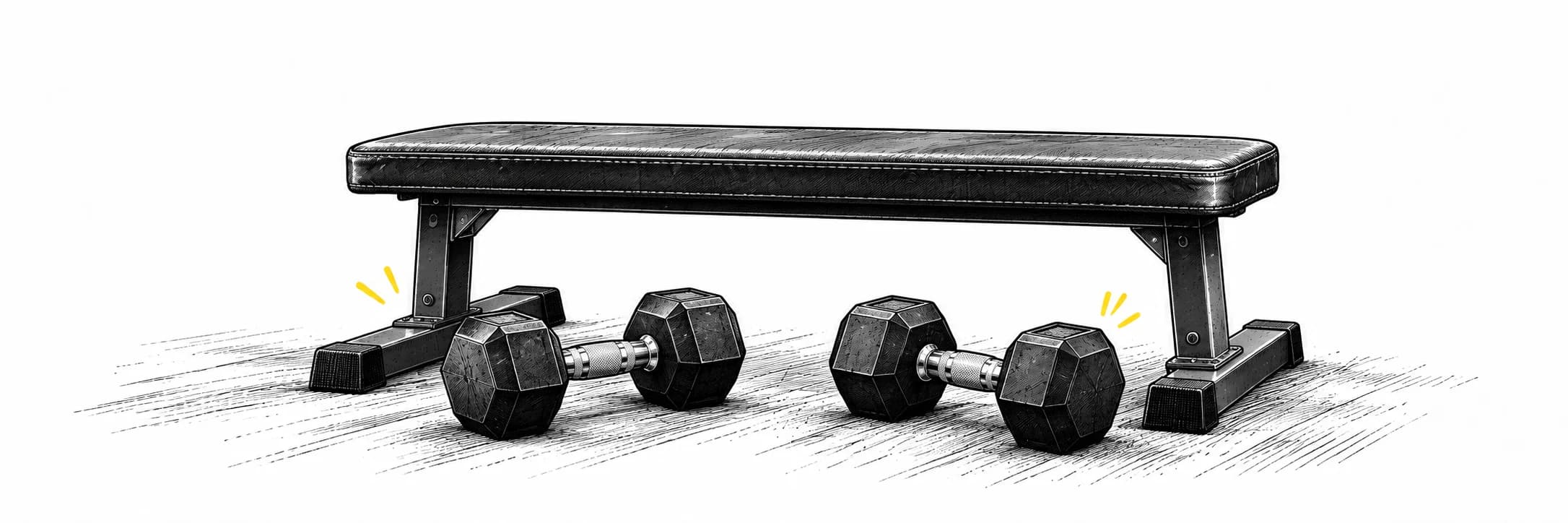
A dumbbell row is a resistance exercise that combines shoulder extension or horizontal abduction with elbow flexion while a dumbbell is pulled toward the torso. Setup and path vary by version.
Definition and muscles
Dumbbell rows involve several pulling muscles, commonly including latissimus dorsi, trapezius, rhomboid region, posterior deltoid and elbow flexors. Trunk and grip muscles also contribute according to stance and support. Acute EMG studies of row variants show that muscle activity changes with exercise setup; they do not establish one muscle as the sole mover or prove long-term adaptation.
Saeterbakken et al. · unilateral and bilateral row EMG study · Lehman et al. · latissimus-training EMG study
Technique options
Use a stable supported or unsupported stance and a load you can control. Pull through a comfortable path toward the torso, then lower under control. Torso angle, elbow path, scapular motion, range, breathing and tempo may vary with the intended emphasis and individual anatomy. A perfectly fixed torso, forced scapular retraction, full arm extension, 1:2 tempo or one breathing pattern is not universally required.
Saeterbakken et al. · unilateral and bilateral row EMG study · Lehman et al. · latissimus-training EMG study
Training effects
Progressive resistance training can improve strength, hypertrophy and endurance. Unilateral and bilateral training produce similar average hypertrophy; strength gains tend to favor the tested mode. This does not show that a one-arm row automatically corrects an asymmetry, permits more useful load, improves posture, or must be paired with a press. Choose the version and dose from the athlete’s goal, capacity and total programme.
Kassiano et al. · unilateral versus bilateral resistance training meta-analysis · ACSM · resistance-training prescription position stand
HYROX® relevance
Sled Pull, Row and SkiErg are HYROX® tasks, but each has technique and whole-body demands that differ from a dumbbell row. A row can provide general pulling training; no direct evidence reviewed here establishes transfer to station performance or a required 3–4 × 8–12 prescription. Practice the stations and use accessory work within the wider plan.
HYROX® Singles Rulebook 2026/27 · ACSM · resistance-training prescription position stand
Frequently Asked Questions
Should I use heavy or moderate loads?
Both can be programmed. Heavier loading tends to favor maximal strength, while many loading ranges can build muscle and endurance when effort and volume are appropriate. The 6–8 and 10–15 ranges are options, not HYROX®-specific requirements.
ACSM · resistance-training prescription position stand
Should I row with one arm or both?
Either version can train pulling muscles. Use the setup that matches your goal, equipment, trunk demand and comfort; evidence does not require both or show that one-arm rows automatically fix side-to-side differences.
Kassiano et al. · unilateral versus bilateral resistance training meta-analysis · Saeterbakken et al. · unilateral and bilateral row EMG study
Marketing text preserved unchanged
Track your pulling strength and row station splits with Repz.
Was this helpful?