Single Arm Cable Row
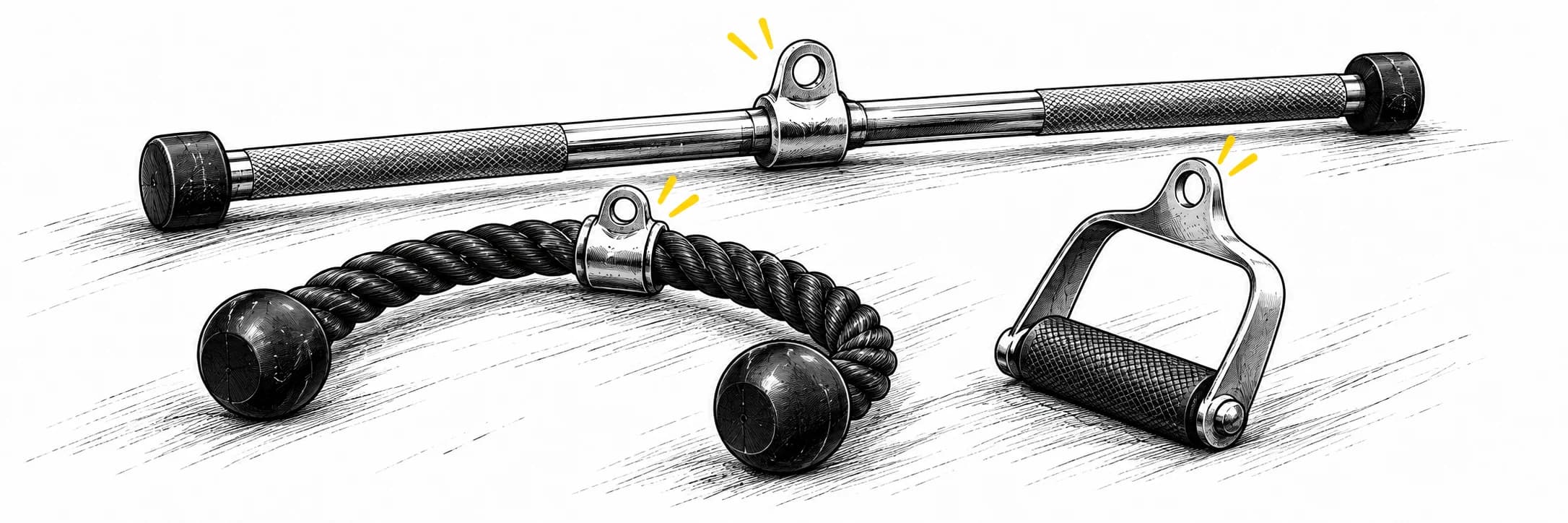
A single-arm cable row is a unilateral resistance exercise combining shoulder extension or adduction with elbow flexion. Its effect depends on setup, technique, load and programme.
Definition and anatomy
In a single-arm cable row, one hand draws a cable handle toward the body while the trunk and lower body provide support. Shoulder extension or adduction can involve latissimus dorsi and teres major; scapular retraction involves trapezius and rhomboids; elbow flexion involves brachialis, biceps and brachioradialis. Exact contribution changes with handle path, grip, posture and resistance.
NCBI Bookshelf · shoulder and upper-limb muscles
Technique options
Choose a stable standing, split-stance, half-kneeling or supported position. Move through a comfortable controlled range without forcing the elbow behind the torso or pinning the shoulder blade in one position. Some trunk rotation can be intentional in a different exercise; limiting it makes the task more isolated. Stop or modify for sharp, worsening or persistent pain and seek qualified assessment when needed.
NCBI Bookshelf · shoulder and upper-limb muscles · ACSM 2026 resistance-training position stand
What unilateral evidence supports
A 2025 meta-analysis found no hypertrophy difference between unilateral and bilateral resistance training overall. Strength gains showed task specificity: unilateral testing favored unilateral training and bilateral testing favored bilateral training. This does not show that single-arm rows automatically detect or correct an imbalance, nor that they are superior to dumbbell or bilateral rows.
Kassiano et al. · unilateral versus bilateral resistance training
HYROX® relevance and limits
HYROX® includes a 50 m rope Sled Pull and a 1,000 m RowErg. A cable row may train general pulling strength, but its force direction, body position, implement and movement cycle differ from both stations. Use it as optional accessory work, with sets, repetitions, load and frequency selected from goals, experience, total programme and response rather than a fixed HYROX® formula.
HYROX® Singles Rulebook 2026/27 · ACSM 2026 resistance-training position stand
Frequently Asked Questions
Which muscles work?
Shoulder extensors or adductors, scapular muscles and elbow flexors can contribute; their relative contribution depends on execution.
NCBI Bookshelf · shoulder and upper-limb muscles
Should the torso never rotate?
Not universally. Minimize rotation when isolation is the goal; deliberate rotation creates a different exercise and should be controlled.
NCBI Bookshelf · shoulder and upper-limb muscles · ACSM 2026 resistance-training position stand
Does it correct left-right imbalance?
Training each side permits separate loading, but correction is not automatic and meaningful asymmetry may require assessment and a broader plan.
Kassiano et al. · unilateral versus bilateral resistance training · ACSM 2026 resistance-training position stand
Marketing text preserved unchanged
Fix your pulling imbalances with single arm cable rows at Repz - 100+ exercises for HYROX® athletes.
Was this helpful?