Single Leg Squat to Bench
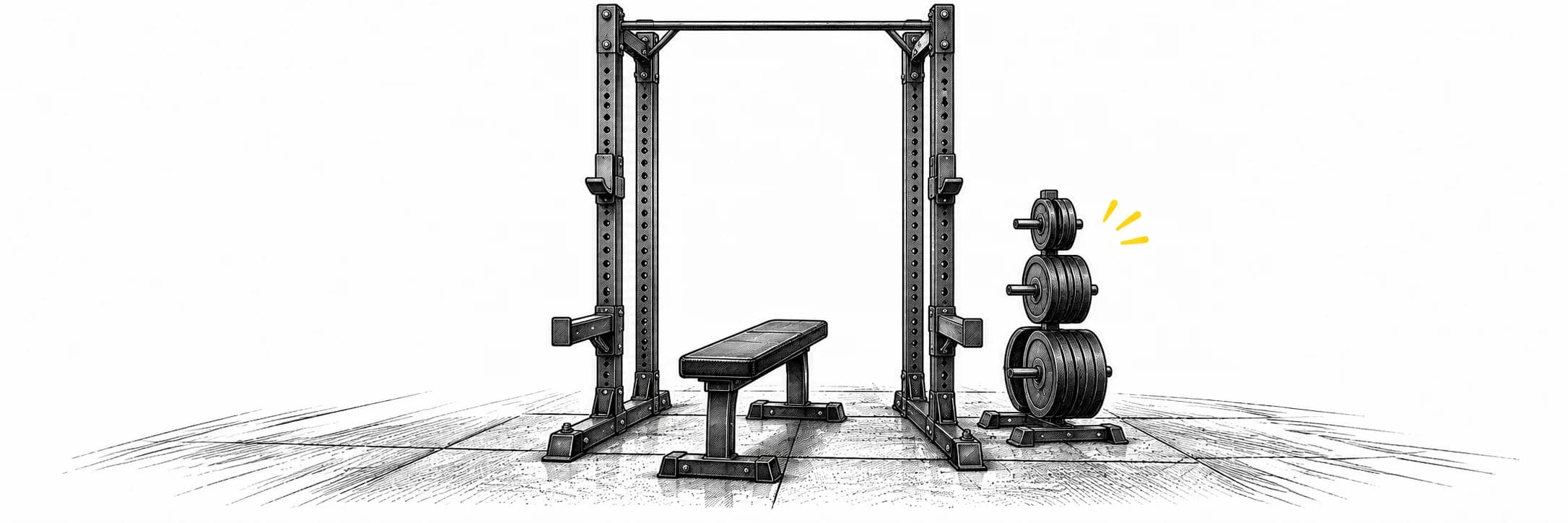
The single leg squat to bench is a unilateral lower-body exercise where you squat down on one leg to a bench target, building the quad and glute strength HYROX athletes need for sandbag lunges, sled push, and running economy.
Movement
A single-leg squat to a bench lowers and raises the body mainly on one leg, with the bench serving as a depth reference or seat. Bench height, trunk position and available hip, knee and ankle motion change the task; it is not automatically safer or easier for every person.
Single-leg squat biomechanics study · ACSM resistance-training position stand 2026
Programming
Choose a bench height and range that allow balance and controlled knee and foot position. Progress may involve range, repetitions or external load, but no universal twelve-repetition or 8–12 kg threshold applies. Side-to-side differences observed during the exercise are not a diagnosis.
Single-leg squat biomechanics study · ACSM resistance-training position stand 2026
FAQ
Is there one correct dose?
No. Select it from the goal, experience and response.
Single-leg squat biomechanics study · ACSM resistance-training position stand 2026
Does it guarantee better HYROX® performance?
No. Training relevance does not guarantee race transfer.
Single-leg squat biomechanics study · ACSM resistance-training position stand 2026
What if it hurts?
Stop for sharp, persistent or worsening pain and seek qualified assessment.
Single-leg squat biomechanics study · ACSM resistance-training position stand 2026
Progress your single-leg strength for HYROX® at Repz - the training platform for hybrid race athletes.
Was this helpful?