Weighted Pull Up
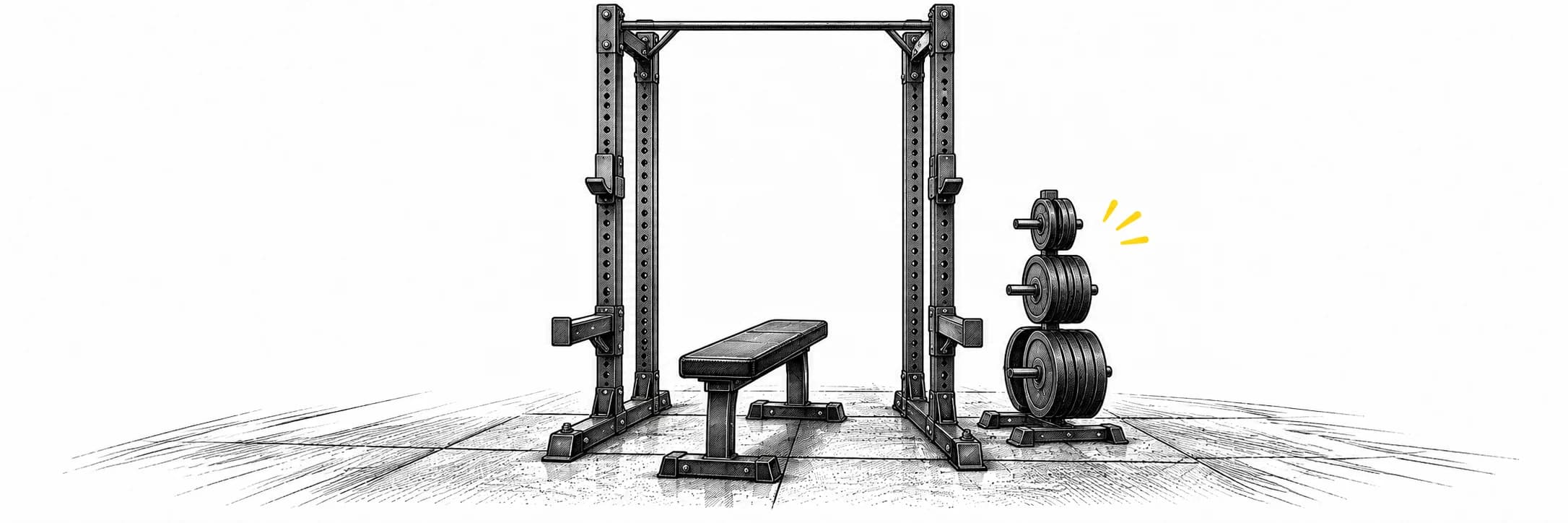
The weighted pull up adds external load to a standard pull-up to build maximal lat and grip strength beyond bodyweight, developing the pulling power HYROX athletes need for sled pull, SkiErg, and rowing station dominance.
Definition
A weighted pull-up is a pull-up performed with external resistance in addition to body mass, commonly from a belt, vest or securely held load. It is a vertical pulling resistance exercise. Added load changes difficulty but does not create a separate competition movement or guarantee transfer to another task.
ACSM 2026 resistance-training position stand
Execution and equipment
Use a stable bar and a load attachment intended for the exercise. Begin from a controllable hanging position, pull without uncontrolled swinging, and use a range that fits the goal and current shoulder and elbow tolerance. Grip and range alter joint and muscle demands; research comparing pull-up grips does not identify one universally safest or best version. Stop for pain, loss of grip security or equipment movement.
Pull-up shoulder biomechanics study
Muscles and evidence limits
Pull-ups involve latissimus dorsi, elbow flexors and multiple shoulder-girdle muscles. Small biomechanics and EMG studies show that recruitment differs by technique, but acute activation is not proof of superior hypertrophy, injury prevention or sport performance. Claims that one grip isolates the lats or that a fixed tempo protects every shoulder exceed the evidence.
Pull-up shoulder biomechanics study · Pull-up variation EMG study
HYROX® context
Weighted pull-ups are not a HYROX® station. Sled Pull, SkiErg and Rowing each have different equipment, rules and movement constraints. General pulling strength may support a training programme, but reviewed evidence does not establish a direct time saving, station-dominance effect or equivalence. Practise the race tasks themselves where specificity is required.
HYROX® Singles Rulebook 2026/27 · Task-specificity resistance-training meta-analysis
Programming
Add external load only after bodyweight repetitions are controlled and the attachment is secure. Choose load, sets, repetitions, rest and frequency from the intended strength or hypertrophy goal, training history and total programme. Progress can mean more load, repetitions or improved control; no universal 10-repetition prerequisite, 2.5–5 kg schedule, rep range or weekly frequency is validated for all athletes.
ACSM 2026 resistance-training position stand
Frequently Asked Questions
When should I add weight?
When bodyweight repetitions are controlled, pain-free and repeatable and you can attach load safely. No universal repetition threshold is established.
ACSM 2026 resistance-training position stand · Pull-up shoulder biomechanics study
Which grip is best?
No grip is universally best. Choose a tolerable grip that matches the intended task and available equipment; different grips change muscle and joint loading.
ACSM 2026 resistance-training position stand · Pull-up shoulder biomechanics study
Will weighted pull-ups improve HYROX® stations?
They can develop the trained vertical-pulling strength, but direct improvements in Sled Pull, SkiErg or Rowing have not been established.
HYROX® Singles Rulebook 2026/27 · Task-specificity resistance-training meta-analysis
Marketing text preserved unchanged
Build maximal pulling strength for HYROX® at Repz - the complete training platform for hybrid athletes.
Was this helpful?