Barbell Hip Thrust
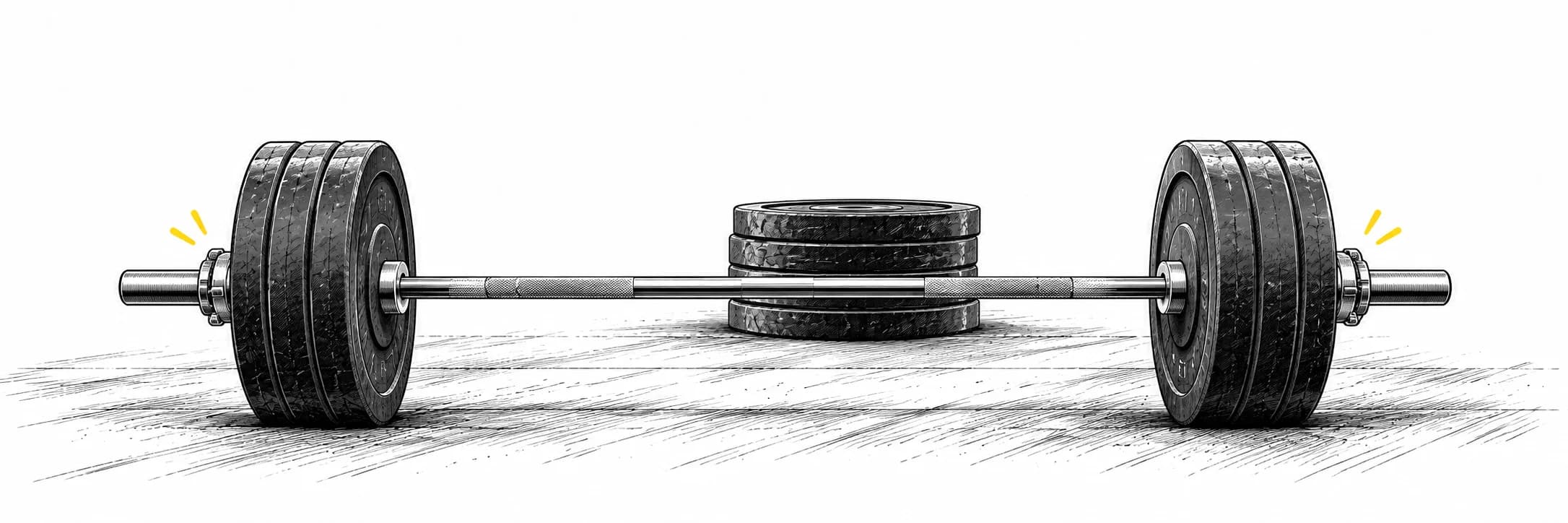
The barbell hip thrust is a bench-supported, externally loaded hip-extension exercise. It trains the gluteus maximus but does not isolate it.
Definition and execution
In a barbell hip thrust, the upper back is supported on a bench or pad, a bar is secured across the pelvis and the hips extend against the load. Setup depends on body dimensions, bench height, equipment and comfort. A stable foot position, controlled range and secure padding matter more than one mandatory shin distance, vertical-tibia endpoint, heel-only pressure, 1–2-second hold or 2-2-3-0 tempo. Hip extension should not be replaced by uncontrolled lumbar extension.
ACSM · 2026 resistance-training guidelines
Muscles and evidence
Gluteus maximus contributes strongly to loaded hip extension, while hamstrings, adductors, quadriceps and trunk muscles may also contribute according to technique and measurement. An EMG review found very high glute activity in hip thrusts and many other exercises; it did not identify the hip thrust as universally highest or prove isolation. In a longitudinal study, higher first-session hip-thrust EMG did not consistently predict hypertrophy, and hip thrust and squat training produced similar measured glute growth.
Neto et al. · gluteus-maximus EMG review · Plotkin et al. · hip thrust versus squat trial
HYROX® transfer
The current HYROX® race includes running, Sled Push, Sled Pull and Sandbag Lunges, but the rules do not prescribe hip thrusts or prove direct transfer. A 2026 meta-analysis found clear improvement in hip-thrust-specific strength, no transfer to squat strength or jump performance, and only minimal, borderline independent sprint transfer, with low to very low certainty. That evidence does not establish improved HYROX® sled, running or lunge performance.
Lin et al. · hip-thrust performance meta-analysis · HYROX® Singles Rulebook 2026/27
Programming and alternatives
The hip thrust may be one option when loaded hip extension fits the athlete’s goal. It is not automatically safer for the spine than deadlifting, and no reviewed source supports a universal deadlift-first hierarchy. Choose load, range, sets, repetitions and frequency from current capacity, technique, symptoms, recovery and programme goals. Deadlifts, Romanian deadlifts and back extensions have different leverage and demands rather than being simple heavier or endurance substitutes.
ACSM · 2026 resistance-training guidelines · Lin et al. · hip-thrust performance meta-analysis
Repz is the training hub for hybrid athletes: adaptive plans, station work, and race strategy in one place. Browse the full library of guides and exercises at repz.app.
FAQ
How heavy should I hip thrust for HYROX®?
No evidence-based target of 1–1.5 times bodyweight for ten repetitions applies to every HYROX® athlete. Use a load that allows the intended range and effort with control, then progress according to response.
ACSM · 2026 resistance-training guidelines · Lin et al. · hip-thrust performance meta-analysis · Plotkin et al. · hip thrust versus squat trial
Hip thrust or deadlift—which is better for HYROX®?
No universal winner or mandatory main/accessory order is established. They load the body differently; selection depends on the intended adaptation, skills, equipment, symptoms and total programme.
ACSM · 2026 resistance-training guidelines · Lin et al. · hip-thrust performance meta-analysis · Plotkin et al. · hip thrust versus squat trial
How often should I hip thrust?
No HYROX®-specific one-to-two-times-weekly requirement is established. Frequency depends on weekly volume, effort, recovery, other hip-extension work and the athlete.
ACSM · 2026 resistance-training guidelines · Lin et al. · hip-thrust performance meta-analysis · Plotkin et al. · hip thrust versus squat trial
Was this helpful?