Cable Fly
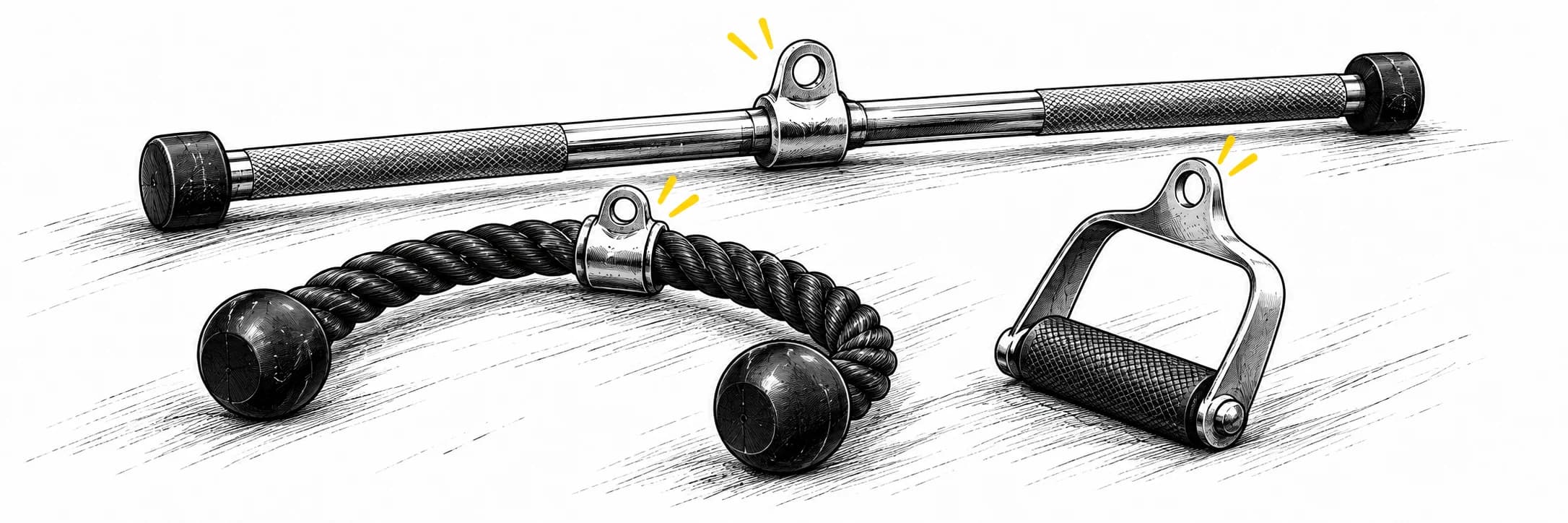
A cable fly is a resistance exercise in which the arms move toward one another against cable resistance, mainly through horizontal shoulder adduction. Setup and trajectory can be varied.
Definition and muscles
Pectoralis major is a large fan-shaped chest muscle with clavicular and sternocostal regions. It contributes to humeral adduction, internal rotation and flexion or extension depending on position. During a cable fly, pectoralis major is a major contributor, while anterior deltoid, elbow flexors and trunk muscles may assist or stabilize. Calling the movement complete “isolation” is imprecise, and a slightly bent elbow does not remove all other muscles.
StatPearls · Pectoralis Major anatomy
Technique options
Set the pulleys and stance so the handles can move through a controlled, comfortable arc. Elbow angle may remain fairly steady, but small changes do not automatically turn the exercise into a press. Pulley height, torso angle and arm path alter the direction of external force; shoulder-height and low settings do not cleanly isolate “middle” and “upper” chest. Range, load, tempo and breathing should suit control and comfort rather than one required 2–3-second eccentric or breathing pattern.
StatPearls · Pectoralis Major anatomy · Enes et al. · repetition-tempo meta-analysis
Training effects
Cables provide external resistance throughout parts of the path, but “constant tension” is not literal and does not prove superior activation, endurance or hypertrophy. Longer-muscle-length and range research suggests exercise range can influence adaptation, but direct cable-fly evidence is limited and no universal full range is appropriate for every shoulder. Many loads and tempos can support hypertrophy when effort and volume are suitable; light-to-moderate load and 2–3 × 12–15 are options, not requirements.
Kassiano et al. · range-of-motion hypertrophy review · Enes et al. · repetition-tempo meta-analysis · ACSM · resistance-training prescription position stand
HYROX® relevance
Sled Push and Wall Balls are whole-body HYROX® tasks. Pectoral muscles can contribute to upper-body force or arm control, but the movements differ from a cable fly. No direct evidence reviewed here shows that cable flies improve either station, that chest endurance is a key limiter, or that pressing exercises must take priority. Use station practice and choose accessory work from the athlete’s needs and total plan.
HYROX® Singles Rulebook 2026/27 · ACSM · resistance-training prescription position stand
Frequently Asked Questions
Are cable flies necessary for HYROX®?
No. They can be one option for pectoral training, but no direct evidence makes them necessary or shows a specific station benefit.
HYROX® Singles Rulebook 2026/27 · ACSM · resistance-training prescription position stand
Should the pulleys be high, level or low?
Each setting changes the force direction and arm path. Choose the position that matches the intended movement and feels controllable; no single height provides “general development” or isolates one chest region completely.
StatPearls · Pectoralis Major anatomy
Marketing text preserved unchanged
Repz brings adaptive plans, station-specific sessions, and race strategy together for hybrid athletes. Explore programmes, exercises, and race strategy at repz.app.
Was this helpful?